WOMEN’S SELF DEFENSE
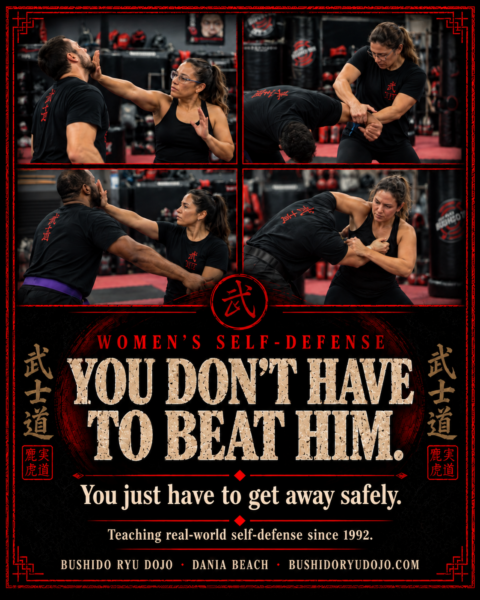
Practical self-defense is designed to get you unharmed and out of the situation you’re in. You don’t have to defeat anybody or have the ability to get in the ring and do 10 rounds with some man and come out victorious. If you stun the guy and run off and get home safe, that’s a win.
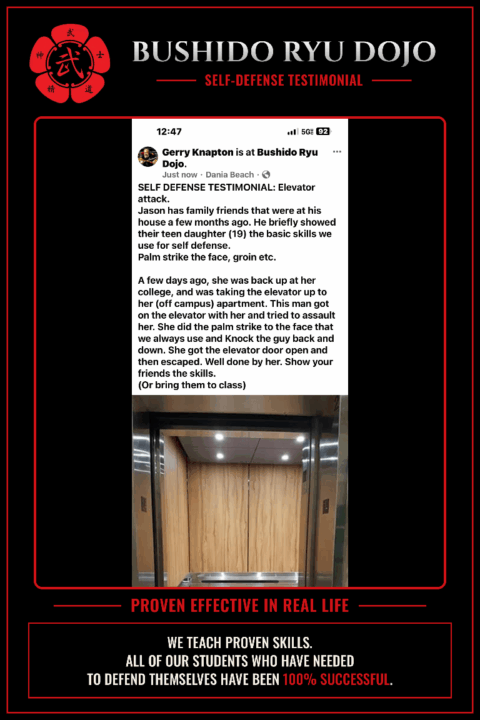
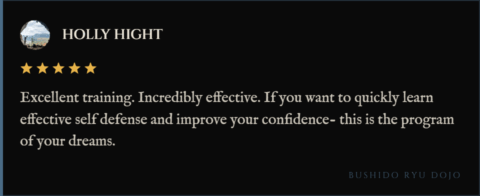
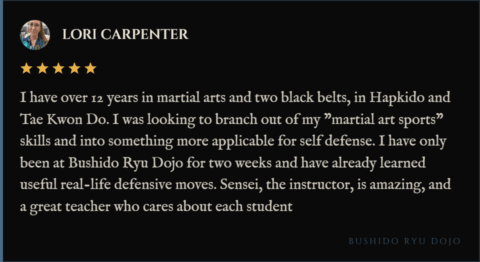
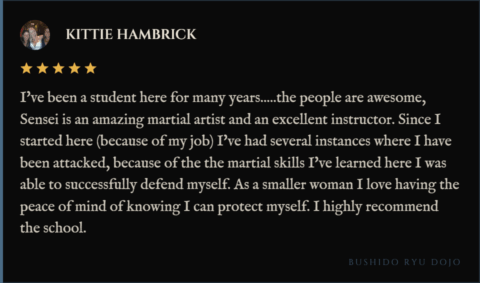
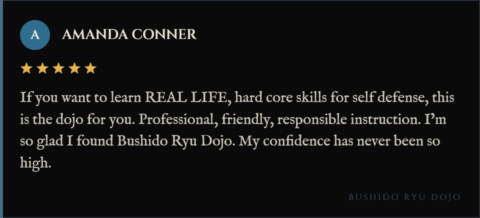
These are simple functional skills. They’ve been proven to work in real life. We’ve been teaching at the dojo in Florida since 1992. Over that time everyone we’ve taught who’s had to use their self-defense skills has been 100% successful. There’s definitely some good fortune in there too but the common denominator was just really simple functional skills. We’ve had numerous women that have trained with us that have had to use their skills to defend themselves. They’ve been successful. You’ll see some of their testimonials below.
CLICK HERE to TEXT the Dojo for Info, Demo Videos & FREE INTRO CLASS times.
CALL the Dojo and talk to Sensei.
Your first class is free. Call or text the Dojo and we’ll find a good time for you.

Fight smarter, not bigger
Most people think self-defense looks like the movies or MMA. It doesn’t. You don’t need fancy, acrobatic techniques, and you don’t need to go five rounds with anyone.
Fight sports have weight classes because in a fair fight, size really does matter. We don’t fight fair. We target the weak areas of the anatomy and then we get out.
Look at a UFC rule book: the things you’re not allowed to do are usually the things you’d want to do in self-defense. We focus on what ends it in a few seconds or less, so you can escape.

What if he’s bigger and stronger than me?
We assume he is. Almost everybody ends up “fighting uphill” against someone taller, stronger and more aggressive, because that person chose you thinking they could victimize you.
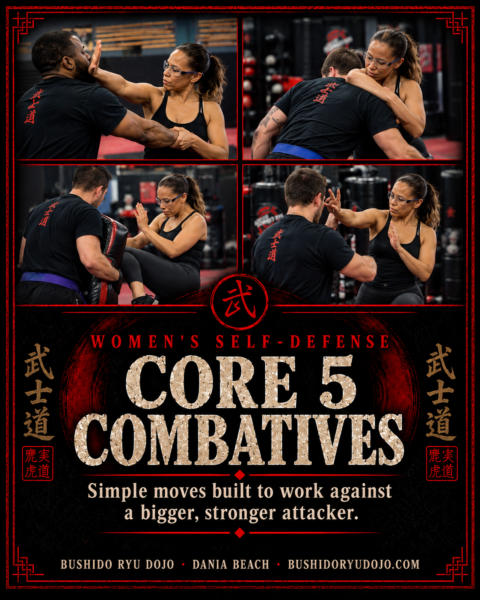
So we don’t make it a muscle match. We go for the eyes, throat, solar plexus and groin. You may not be that big or that strong, but if you tap somebody in the eyes with your fingertips, they’re going to step away.
Attackers also tend to underestimate women. They don’t see you as a fighter, so they’re not on guard. A lot of times that gives you a free shot.
We teach men and women the same way. What matters is the other person’s size, power and skill compared to yours, and how we take away their advantages. Even as a smaller woman, your leg is longer than his arm.

The two kinds of threats women face
- The same violent attacks anyone faces: a sucker punch, a hook punch, a hard push, being slammed to the ground.
- Grabs and invasive contact: someone grabs your wrist, tries to pull you along or take you somewhere. It may not be life or death, but you want them to let go.

For that second kind, you don’t always need to fight. A simple wrist release gets the grip off you. If someone grabs you with intent to harm you, we use practical skills to stun them and get away.
People tend to sort others into fighters and non-fighters. Someone who sees you as a non-fighter is more likely to get in your space and put hands on you. That’s an extra layer women face that most men don’t.

Where you start: Core 5 Combatives
Everyone starts with our Core 5 Combatives: skills, tools and a roadmap for the most common situations. Somebody tries to punch you, somebody tries to grab you, or in the worst case, somebody has a weapon.
Street attacks are simple. Criminals don’t do movie stuff, because they don’t need to. Our defenses are simple too, both by necessity and by design, and very, very effective.
I’m an 8th-degree black belt with 49 years of experience, and what I’d do to defend myself is identical to what I’ll show you. These are the most straightforward, highest-percentage moves there are.

You can use these from your very first class. We’ve had several students defend themselves on day two, after just one or two classes, and all of them were successful.
A toolbox, not one style
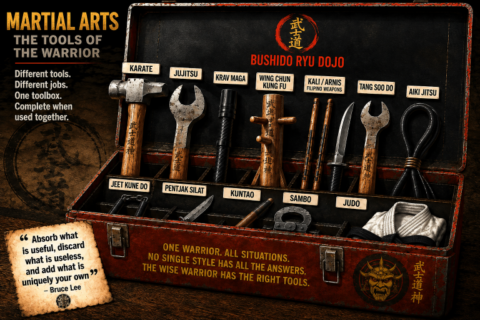
Different martial arts specialize in different things, so I use the analogy of a toolbox. When you have all the tools, you can handle all the different circumstances.
- Karate and Krav Maga: punches, kicks, elbows and knees, and defending against them.
- Jujitsu: locks, throws, chokes, takedowns and the ground. This is our main tool for grabs and restraints.
- Wing Chun Kung Fu: extreme close range, nose to nose.
- Kali and Arnis: using and defending against weapons, including everyday things like a flashlight, an umbrella or your phone.
It’s also way easier to learn than most people think.
You can start right where you are
You don’t need any experience. We start from square one with the basics, what’s sometimes called the alphabet of motion. Starting brand new is actually easier, because there’s nothing to unlearn.
You don’t need to get fit first, either. You’ll get stronger, more flexible and better balanced along the way. Sooner is always better than later.
I use the analogy of learning to swim. Once you can swim, falling off the dock isn’t a tragedy. Once you have the basics of self-defense, you have that peace of mind from that moment on.
We’re an adult class. Most of our students are in their 30s to 60s, and my oldest student is 83. No particular athletic ability is needed.
Have an old injury or a physical limitation? We work around it all the time. If there’s something you shouldn’t do, we skip it and teach you other skills.
If you’re worried you’ll freeze
We address this directly. We teach breathing for fear control, including box breathing, along with mental skills for handling pressure and stress.
Our skill builders get you used to pressure step by step, adjusted to your comfort level. A lot of freezing happens because a person doesn’t know what to do. When you know and you’ve practiced it, you’re much less likely to freeze.
If you’ve had a frightening experience in the past, we can talk about it in your 30-minute sit-down before class, and we’ll adjust to what you need.

Avoiding the fight comes first
The first layer of self-defense is what we call preventive medicine. It’s always easier to catch things further upstream and just not be in the situation.
Physically, we teach defending through distance. When somebody comes at you down the path of aggression, you get off the path. You’re not at ground zero when it lands.

Pay attention without being paranoid. Don’t dig through your trunk without looking around. Many attacks are crimes of opportunity, and if they don’t see the opportunity, they keep walking.
Confidence you carry with you
Martial arts training done correctly is a personal transformation. Like we say, the training will change your life and, if needed, save your life.
In studies where violent criminals watched people walk by, they often passed on smaller people and women who had what was called an “organized quality”: confidence, paying attention, seeming to have it together.
All you have to be is more trouble than it’s worth. Attackers go looking for easier victims.
The biggest payoff is peace of mind. It’s like a full warranty on a new car: you don’t want to use it, but you know it’s there. We call that peace through strength.
What training is actually like
Our classes are mixed, and I recommend women train against men. Getting used to their size and power gives you a more realistic experience and more confidence.
As a new student, you’re paired one-on-one with a senior instructor. They calibrate everything to your skill, your fitness and your comfort.
Contact is controlled. You’re not going to get hurt, and you won’t take rough contact in your first classes. Lighter, controlled drills work better than getting slammed and injured.
Sparring comes later and starts slowly. You work a basic combination back and forth with your instructor. It’s not a live fight, and it’s very much under control.
If you ever feel uncomfortable, just say “stop,” or do a quick double tap. Everyone stops right away.
We film you training and send you your clips, along with tutorial videos for each technique. You can review them on your phone or computer and see your skills grow.
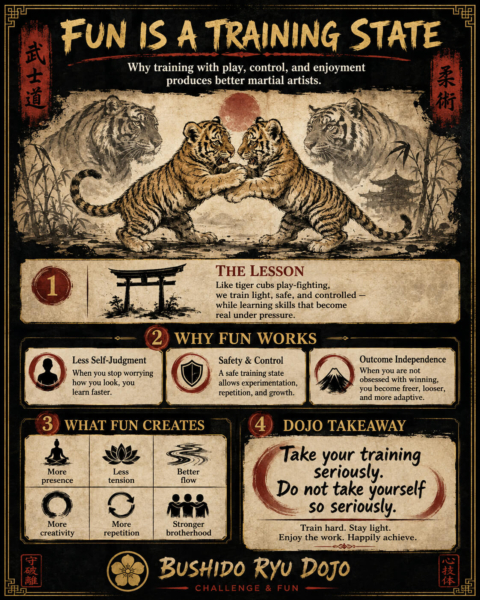
Fun is a training method. Baby tigers learn to be tigers by play-fighting, and they end up with phenomenal fighting skills. These are real skills that really work, but you don’t have to learn them in a grim or intimidating way.
The Four Pillars
- Real-world self-defense, and the peace of mind that comes with it.
- Personal transformation in mind, body and spirit.
- The Dojo community: a warm, happy, supportive group of Dojo brothers and sisters.
- The fun and challenge of real martial arts training.
Self-defense is the fundamental focus, and everything else comes off of that. Everyone treats each other with respect, and everyone here has been the new person once.

Weapons, pepper spray and carry
Pepper spray, a solid flashlight or a carry weapon can all help. But if your spray is at the bottom of your bag when someone rushes you, you won’t be able to dig it out.
So we start with defending yourself barehanded, because your body is the one thing you’ll have in every situation. Any weapon you add is a bonus.
Our Core 5 Combatives for weapons cover the most common weapon attacks. If someone just wants to rob you, give them what they’re after. We only use weapons defenses when someone is trying to hurt you.
Students who have had to defend against weapons have all been successful. We also teach knife and stick skills and how to keep someone from taking your firearm. We don’t do firearms instruction, but we’ll point you to people we recommend.

Your free intro class
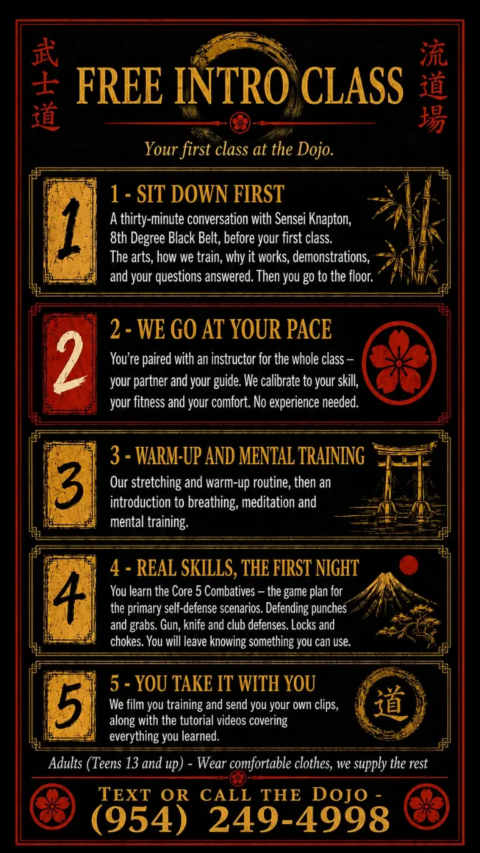
Call or text the Dojo and we’ll find a good time for you. We start with a 30-minute sit-down. I’ll answer your questions, demonstrate techniques and show you through the Dojo.
Then you’re paired with one of our instructors, who’ll be your partner and guide for the whole class. The most common thing people tell us afterward is that they learned a lot and had a lot of fun.
Wear workout clothes, like shorts and a T-shirt. We have all the gear and we supply water. You’re welcome to bring a friend, your partner or your daughter (13 and up). Just let us know ahead of time.
CLICK HERE to TEXT the Dojo for Info, Demo Videos & FREE INTRO CLASS times.
CALL the Dojo and talk to Sensei.
Class times and tuition
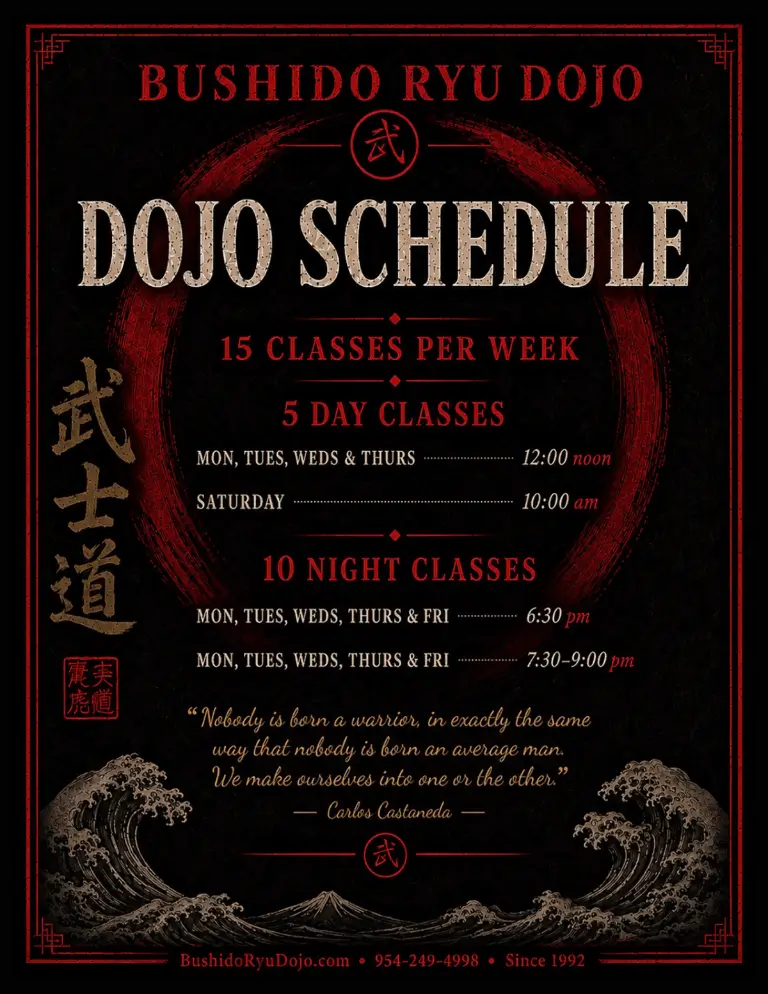
We have 15 classes a week: 5 day classes and 10 night classes. Most students train 2 to 3 times a week. Do that for 6 months and you’ll be able to handle just about anything that comes your way.

Training is $198 a month, and you can come to as many of the 15 weekly classes as fit your schedule. No contracts. It’s month-to-month.
Finding the Dojo
We’re in the middle of Dania Beach, just north of Sterling Road and US-1, by Jaxson’s Ice Cream and Grampa’s Restaurant. We’re right across the street from City Hall and the public library.
It’s about a mile south of the Fort Lauderdale airport and right next to Hollywood. We’ll send you a map and a driving video that shows you where to park.

What our students say

Questions women ask us
Do I need experience, or to get in shape first?
No. We start you from square one and calibrate the training to where you are physically, skill-wise and in comfort level. Sooner is always better than later.
Can I really defend myself against a bigger, stronger man?
Yes. We assume the attacker is always bigger and stronger. We don’t try to match strength. We target weak areas like the eyes, throat and groin, and get you out of there.
Is there an age limit?
Classes are for adults and teens 13 and up. Most of our students are in their 30s to 60s, and my oldest student is 83.
Are the classes women-only?
No, our classes are mixed. I recommend women train against men, because getting used to their size and power gives you a more realistic experience and more confidence.
Will I get hurt?
No. Everything we do is controlled contact, and as a new student you work one-on-one with one of our senior instructors, who adjusts to your comfort level.
How long until I can defend myself?
The skills work from your first class. Train 2 to 3 times a week for 6 months and you’ll be able to handle just about anything that comes your way.
What does training cost?
$198 a month, and you can come to as many of our 15 weekly classes as you like. No contracts. It’s month-to-month.
What should I wear or bring?
Workout clothes, like shorts and a T-shirt. We have all the gear and we supply water.
Can I bring a friend, my partner or my daughter?
Yes, you can bring a second person. Just tell us ahead of time who you’re bringing. The minimum age is 13.

Where is the Dojo?
In the middle of Dania Beach, just north of Sterling Road and US-1, across the street from City Hall and the public library. We’re about a mile south of the Fort Lauderdale airport.
How do I book my free intro class?
Call or text the Dojo at (954) 249-4998 and we’ll find a good time for you.
Book your free intro class
Text or call and we’ll find a time that works for you. Just come on out, relax and have some fun. We’ll take care of you.
Bushido Ryu Dojo · 35 SW 1st Ave, Dania Beach, FL 33004 · (954) 249-4998